 Profile Madison Clark (01)Madison ClarkConfident LibrarianView Character →
Independent Product Overview · Germany
Funfun AI: Create, Discover, and Understand Companions
Funfun AI publicly presents itself as a platform for fictional AI characters. This guide organises the visible features, explains the process without promotional promises, and shows six original views accessed on 19 October 2026.
- Multi-step creation
- Public character selection
- Chat and image features per source
 Public homepage · Captured on 19.10.2026
Short Answer
What is Funfun AI and how do you start using it?
Funfun AI is a web-based AI companion intended only for adults according to the terms of use: users choose a fictional character or create their own and then chat with it. The current web terms describe five messages before the payment page, then monthly or yearly access and 100 monthly tokens; concrete euro amounts are not listed there, so the actual checkout must be checked. Conversations are not a human relationship, and content flagged by moderation may be manually reviewed according to the terms if suspected violations occur.
00
Public Character Catalog
15 Funfun AI Models at a Glance
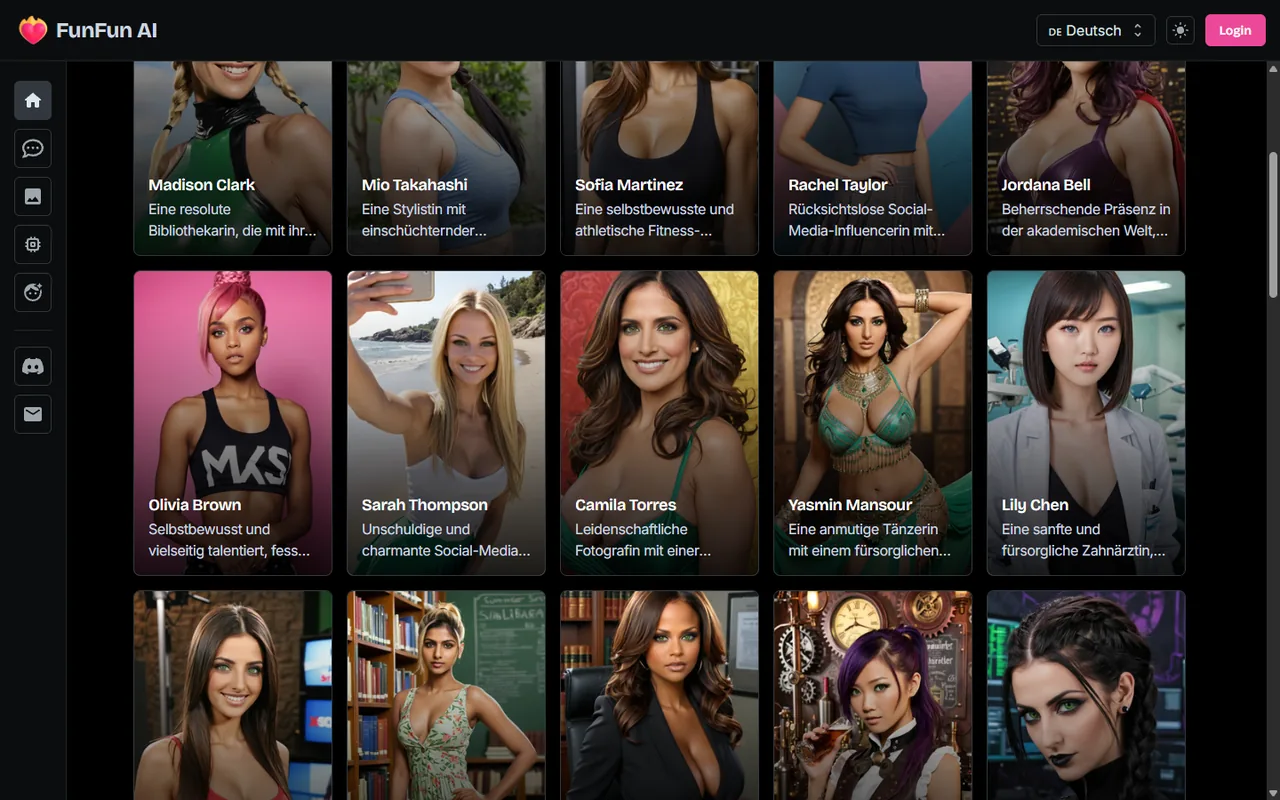
These fifteen clearly adult, fictional characters come from the publicly accessible FunFun AI catalog. The selection shows different roles and styles without promising availability, chat quality, or premium access.
Profile Madison Clark (01)Madison ClarkConfident LibrarianView Character → Profile Sofia Martinez (02)Sofia MartinezAthletic Fitness TrainerView Character →
 Profile Jordana Bell (03)Jordana BellAssertive HistorianView Character →
 Profile Olivia Brown (04)Olivia BrownMusician with Creative HobbiesView Character →
 Profile Yasmin Mansour (05)Yasmin MansourDancer and Garden LoverView Character →
 Profile Ananya Sharma (06)Ananya SharmaQuiet Librarian with Art InterestView Character →
 Profile Destiny Lewis (07)Destiny LewisEnergetic LawyerView Character →
 Profile Sakura Yamamoto (08)Sakura YamamotoPlayful BartenderView Character →
 Profile Zara Ahmed (09)Zara AhmedSoftware Developer with Music InterestView Character →
 Profile Mia Anderson (10)Mia AndersonEccentric JournalistView Character →
 Profile Eva Novak (11)Eva NovakFree-Spirited Dancer and PhotographerView Character →
 Profile Pamela Smith (12)Pamela SmithCurious HistorianView Character →
 Profile Rachel Taylor (13)Rachel TaylorConfident Social Media PersonalityView Character →
 Profile Lily Chen (14)Lily ChenEmpathetic DentistView Character →
 Profile Molly Harrington (15)Molly HarringtonVersatile BloggerView Character →
Each image leads through the local commercial redirect path. The profiles are public product examples and not real people.
01
What is it?
What Funfun AI publicly offers
Funfun AI is, according to the public homepage, a web-based environment where users can select fictional AI companions or assemble their own character. The focus is not on classic search answers but on a persona with name, appearance, interests, and conversation style. The homepage therefore combines a direct creation call with a catalog of existing figures. Each visible card contains a name and a short role description. This makes the entry comparable to a selection in a character library: first you decide on a direction, then the actual interaction begins.
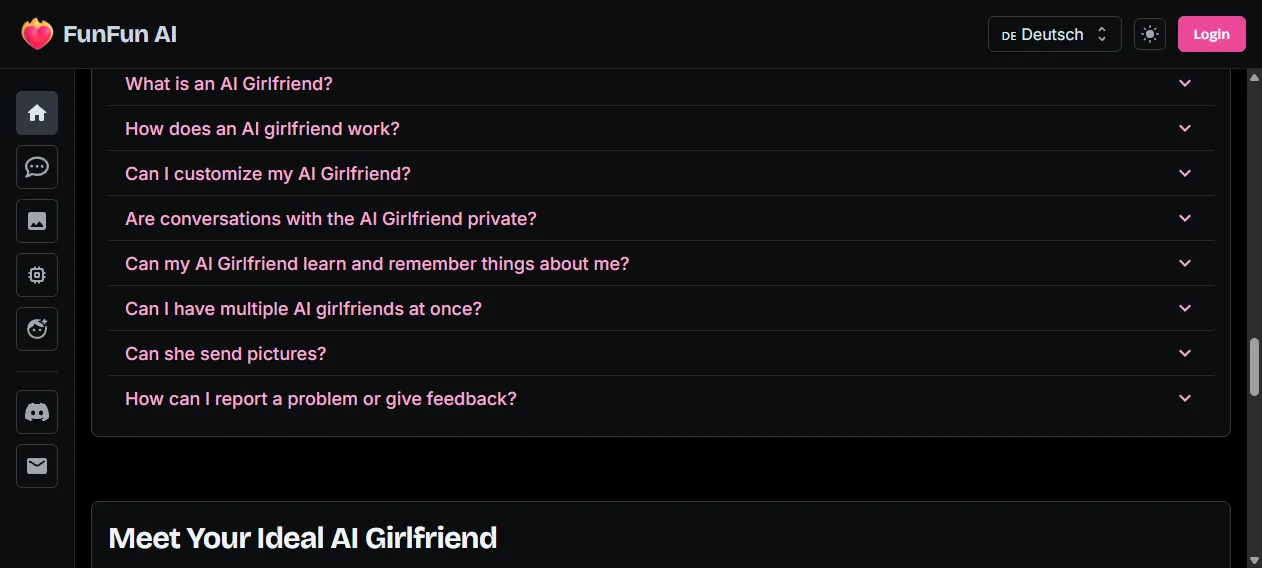
It is important to classify: such a figure is not a real person. The public FAQ of the source also describes the experience as a simulation for entertainment and companionship. Answers arise from software and the respective conversation context. Personality, continuity, and closeness are thus designed properties of the application, not a human relationship. Anyone trying the service should not regard the conversation as a confidential substitute for professional advice and should not enter sensitive data. The source itself advises in its FAQ to handle personal information with caution.
Observed, not assumed: This overview only adopts elements that were visible on public Funfun pages. Prices, guaranteed memory duration, and inaccessible account functions are deliberately not claimed.
02
How it works
The Funfun AI process in four understandable stages
- 1
Choose Direction
On the public homepage, you can first compare existing figures via names and short profiles. This is the fastest way to check tone, role, and interests before starting a conversation.
- 2
Shape Your Own Figure
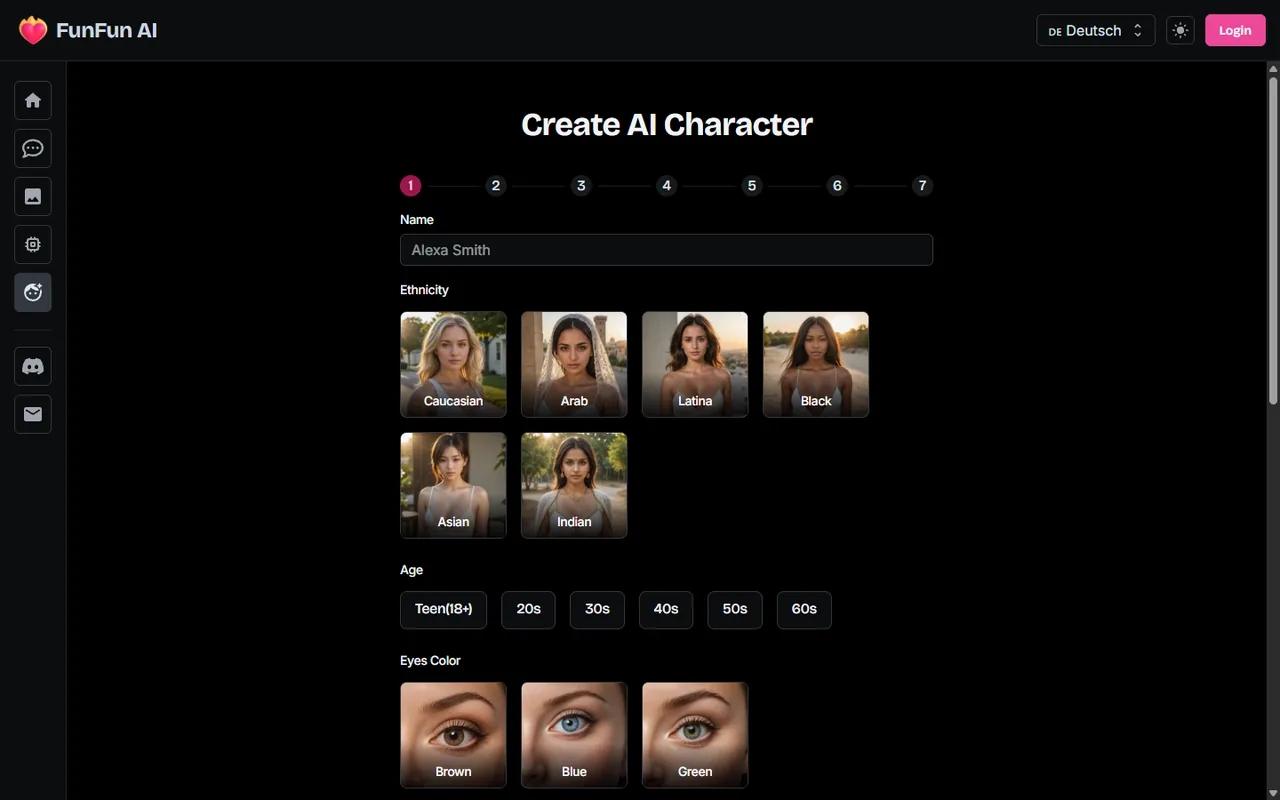
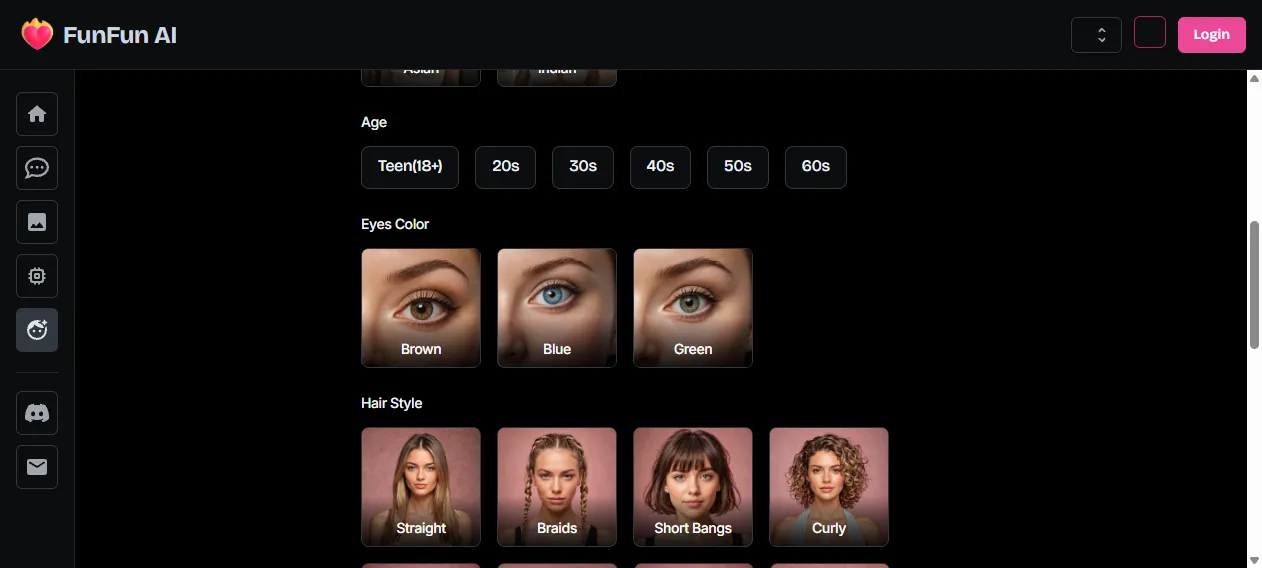
The public editor shows a multi-step process. Visible are, among others, name, appearance options, age groups from 18+, eye color, hairstyle, and hair color. The selection is visually organized.
- 3
Describe Persona
The public tool page explains that traits, personality, and background serve as a starting point. The clearer the role, tone, boundaries, and scenario are formulated, the more understandable the desired figure is defined.
- 4
Check and Adjust Chat
After creation, according to the source, the conversation is the focus. The tool page also mentions saving, later adjustments, and images around the character. Which function is available may depend on the current product state.
03
Public Evidence
Six Real Funfun AI Screenshots Explained
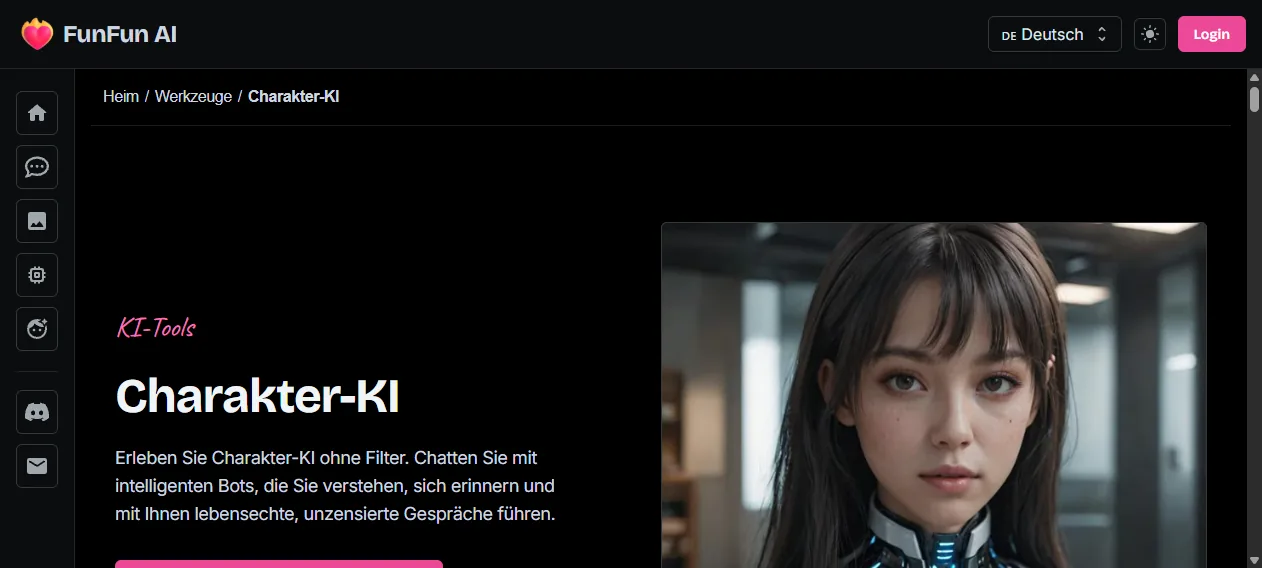
All following images come from publicly accessible pages of the source. They were only reduced in web format, not reassembled. The interface language is sometimes mixed; that is the actually observed state of the German routes and not a translation of this guide.
04
Practical Use
How a selection becomes a clearly defined figure
Start with a Purpose
Before colors and hairstyles, it should be clear what the figure is for: casual conversation, roleplay, writing prompts, or a recurring fictional counterpart. A clear purpose prevents contradictory specifications. A short description like 'quiet travel companion with dry humor' is often more helpful than a long list of arbitrary traits.
Separate Role and Tone
The role describes who the figure is in the scenario; the tone describes how it speaks. A librarian can be factual, warm, strict, or playful. If you define both separately, you can adjust more specifically later if answers fit the topic but not the desired voice.
Set Boundaries Explicitly
Even in a fictional conversation, clear boundaries are useful. Topics to be avoided can be named as well as the desired length of answers. This makes expectations more understandable. Personal contact details, financial information, passwords, and confidential documents do not belong in a companion chat.
Iterate with Short Tests
After creation, three or four test questions help: a greeting, a question about the backstory, an unexpected topic change, and a request for a summary. This shows whether role and tone appear stable. Only then is it worth adding additional details or visual wishes.
05
Classification
When Funfun AI fits the sought usage type
Quick DiscoveryThe public figure catalog is suitable when you want to compare examples first.
Visual CreationThe editor uses tiles and steps when a figure should be systematically assembled.
Persona-Oriented ChatThe source focuses on roles, personality, and ongoing conversation rather than pure factual search.
Price SearchThe terms describe five messages before the payment page as well as monthly or yearly access, but do not list a euro amount there. The current checkout is decisive.
The most sensible evaluation therefore begins not with superlatives but with your own goal. If you are looking for a visual character editor, a visible catalog, and persona-oriented conversation, you will find public entry points for that. If, on the other hand, you expect verifiable professional advice, human confidentiality, or guaranteed long-term memory, you should not derive these expectations from the interface. The privacy policy describes contact data, analysis purposes, and supporting third parties; additionally, the terms allow manual review of flagged conversations in case of suspected violations. Product views can also change. The screenshots document only the publicly observed state on October 19, 2026.
Frequently Asked Questions
Funfun AI FAQ for Germany
Is Funfun AI free to use?
The current web terms describe five messages before a payment page appears. After that, monthly or yearly access is mentioned. For paying users, the terms mention unlimited messages and 100 monthly tokens for advanced features. A concrete euro price is not listed in the reviewed terms; therefore, check the amount, duration, and automatic renewal directly in the checkout.
What age limit applies to Funfun AI?
The terms of use require a minimum age of 18 years and the legal capacity to enter into a contract. This matches the visible adult age options in the editor. A fictional representation does not change this access requirement. Those under 18 should not use the service and should not provide false account data.
Are Funfun AI chats completely private?
Absolute confidentiality cannot be derived from the documents. The terms generally designate conversations as confidential but also explain that a moderation filter can flag content and that manual review is possible in case of suspected violations. The privacy policy also mentions contact data, analysis purposes, and supporting third parties. Therefore, do not share passwords, financial data, or others' secrets.
Can I create multiple figures and media?
The terms and public pages describe multiple AI companions as well as text, image, voice, and video functions. Visible documentation mainly includes catalog, character editor, and image-related options. Whether a specific media function is available in Germany, on your device, or in your plan must be checked in the current account; a marketing page is not a guarantee of access.
How can I cancel a subscription?
According to the web terms, cancellation can be done in the account settings. Access continues until the end of the already paid period; refunds are only limited there. Before signing up, check whether monthly or yearly billing is selected, when access renews, and what confirmation is shown after cancellation.
Next Step
Start with Clear Expectations
Use the local redirect path if you want to check the currently available options yourself.